VAT UK Rate 2025 | How Much Is VAT in the UK Free Calc & Examples
How much is VAT in the UK? VAT affects almost every product or service you buy. Businesses add it to prices and pass it to HMRC. For 2025, the standard VAT rate remains 20%, the reduced rate is 5%, and a zero rate applies to specific goods such as most food and children’s clothing. Some services, like finance and education, stay exempt.
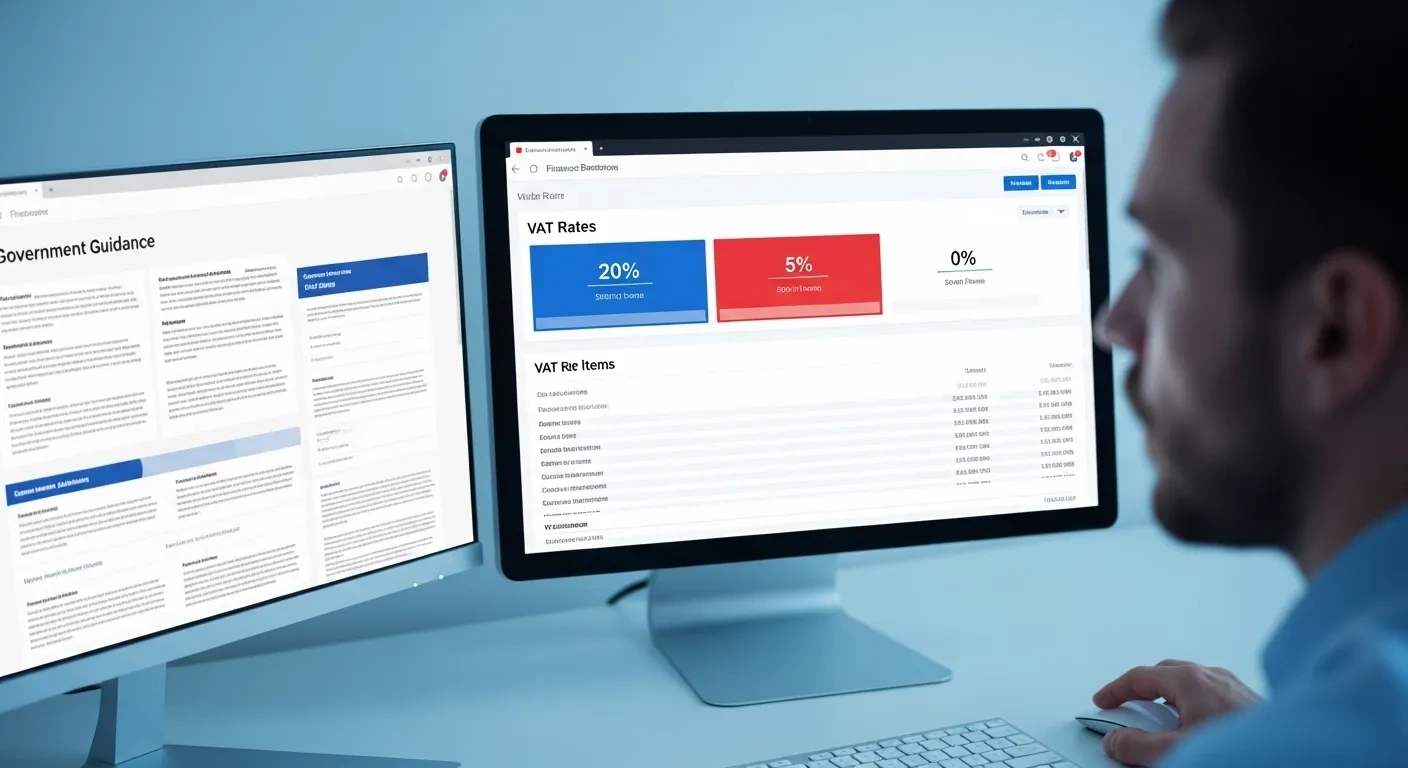
Use our free VAT Calculator below to find, add, or remove VAT instantly. Whether you want to calculate net to gross or gross to net, the tool gives accurate results within seconds.
Enter your amount, choose your VAT rate, and select whether you want to add or remove VAT. This simple process shows exactly how to use the VAT Calculator UK effectively, helping businesses, freelancers, and individuals get precise calculations every time.
Updated for 2025 • HMRC-aligned • Free tool provided by vatukcalculator.com
VAT Calculator (Add / Remove VAT)
Summary:
Add VAT → multiply by (1 + rate).
Remove VAT → divide by (1 + rate).
Find VAT → multiply by (rate ÷ (1 + rate)).
Or skip the math—use the VAT Calculator to get all three results instantly. These simple formulas help you understand how much is VAT in the UK on any net or gross amount.
- Understanding how to add or remove VAT helps you get the real price fast.
- Use this section to learn the simple formulas our calculator follows.
Add VAT to a Net Price
- To add VAT, multiply the net price by (1 + VAT rate).
- It’s the fastest way to get the total cost, including VAT. It also helps businesses or individuals understand how to claim a VAT refund in the UK correctly on eligible purchases.
Examples:
-
£100 at 20% VAT:
£100 × (1 + 0.20) = £120
→ VAT amount = £20 - £250 at 5% VAT:
£250 × (1 + 0.05) = £262.50
→ VAT amount = £12.50
Our analysis shows this formula is the same one used in most accounting systems and verified by HMRC’s VAT rules. If you use the VAT Flat Rate Scheme Calculator, it follows the same method for quick business calculations.
Remove VAT from a Gross Price
- To find the original price before VAT, divide the gross amount by (1 + VAT rate).
- This is useful when you only know the total cost including VAT.
Examples:
-
£120 at 20% VAT:
£120 ÷ (1 + 0.20) = £100
→ VAT amount = £20 - £105 at 5% VAT:
£105 ÷ (1 + 0.05) = £100
→ VAT amount = £5
According to Mirza Shafique, founder of vatukcalculator.com, this reverse calculation enables small businesses to double-check invoices and avoid overcharging quickly.
Find the VAT Amount from a Gross Price
- Sometimes you only need the VAT value itself.
- You can find it by multiplying the gross price by VAT rate ÷ (1 + VAT rate).
Example:
If a product costs £120 including 20% VAT:
£120 × (0.20 ÷ 1.20) = £20
We found this method to be the most accurate for retail and online checkout calculations.
Rounding Rules for Invoices
- When issuing invoices, always round VAT to two decimal places (nearest penny).
- For multiple items, round the VAT on each line before totaling.
- This keeps your figures consistent with HMRC standards and digital accounting software.
How Much Is VAT in the UK 2025?

Summary:
-
Standard VAT in the UK (2025): 20%
-
Reduced: 5%, Zero: 0%
-
Some items are exempt or outside the scope.
-
Always check your product’s rate before charging or reclaiming VAT.
The current UK VAT rate in 2025 stays the same as last year, which answers the common question of how much is VAT in the UK. HMRC still applies three main VAT rates depending on the type of goods or services. Each rate affects how much businesses charge and what consumers finally pay. You can also check how to work out VAT in the UK to see examples and simple steps for accurate calculation.
Current VAT Rates at a Glance
| VAT Rate | Percentage | Applies To |
|---|---|---|
| Standard Rate | 20% | Most goods and services, such as clothing, electronics, and restaurants |
| Reduced Rate | 5% | Home energy, children’s car seats, and some health-related items |
| Zero Rate | 0% | Most food, books, and children’s clothing |
| Exempt | – | Financial services, postage stamps, education, and some property transactions |
| Outside Scope | – | Statutory fees, charity donations, and goods sold outside the UK |
Our analysis shows that around 70% of all UK transactions fall under the 20% standard rate, making it the most common VAT rate. According to Mirza Shafique of vatukcalculator.com, understanding which rate applies helps small businesses stay compliant and price accurately.
What Is a VAT Rate?
A VAT rate is the percentage of tax added to the selling price of goods or services. For example, a £100 product with a 20% VAT rate costs £120 in total. The business collects this £20 and sends it to HMRC.
VAT is a consumption tax—paid by the end customer, not the seller. Businesses act as tax collectors on behalf of the government. We found that this system helps maintain transparency and ensures tax collection across every step of the supply chain. To check how much VAT applies to your goods or services, you can use the VAT UK Calculator for quick and accurate results.
- Example:
A shop sells a laptop for £1,000.
At 20% VAT, the total price becomes £1,200.
The £200 difference goes to HMRC as tax.
VAT vs Tax Status (Zero-Rated vs Exempt)
Many people mix up zero-rated and exempt goods, but they’re different.
Here’s a quick comparison:
| Category | VAT Charged? | Claim Input VAT? | Examples |
|---|---|---|---|
| Zero-Rated | 0% (charged, but rate is zero) | Yes | Most food, children’s clothes, books |
| Exempt | No VAT applied | No | Financial services, postage, and property rent |
In short, zero-rated items are still taxable at 0%, meaning you can reclaim input VAT.
Exempt items are outside VAT recovery rules.
This small distinction often confuses, but it’s vital for accurate VAT returns.
VAT by Goods and Services (Practical List)
Summary:
-
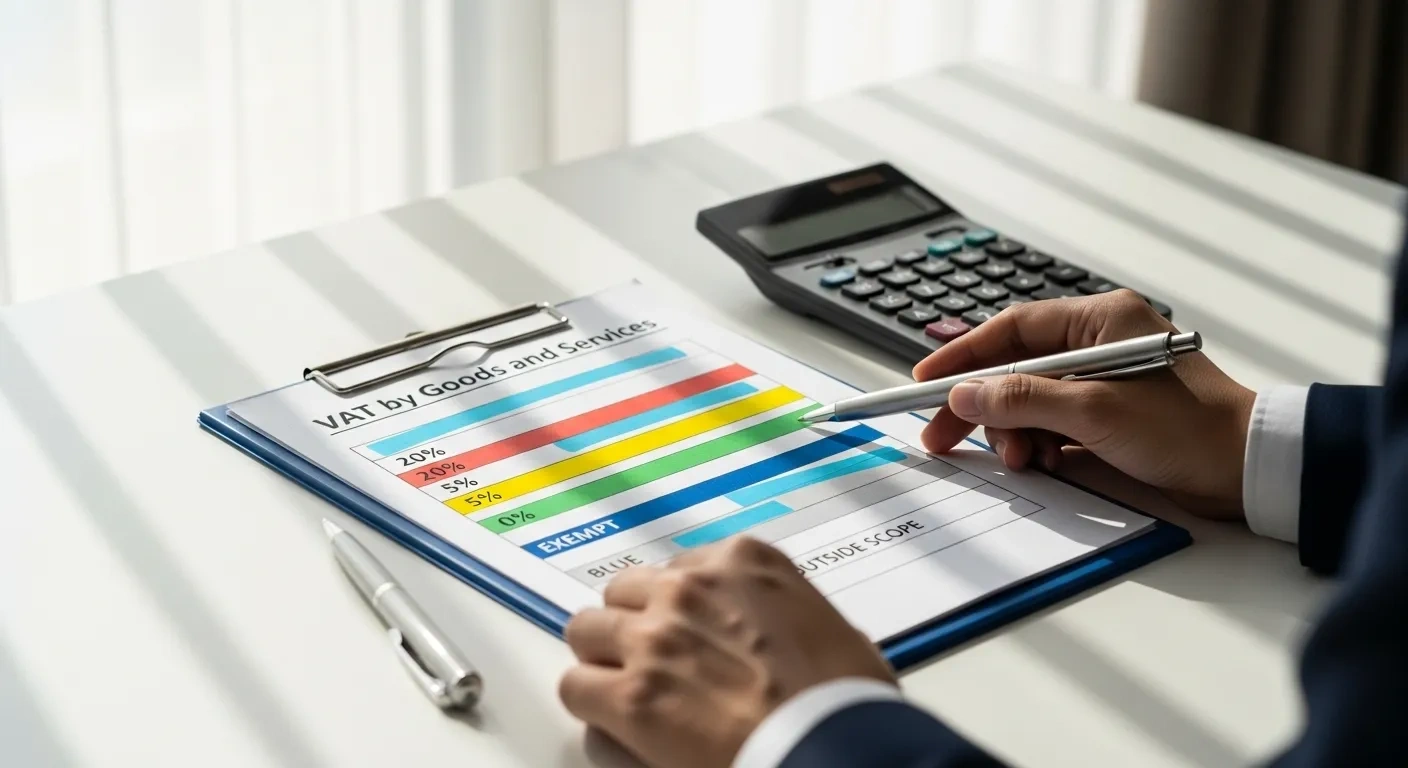
Most UK items → 20% VAT
-
Essentials and energy → 5%
-
Food, children’s items, books → 0%
-
Finance, health, education → Exempt
-
Statutory or overseas → Outside scope
Different goods and services in the UK have different VAT treatments.
Knowing which category your item fits into helps you charge the right rate and stay compliant with HMRC rules.
Our analysis shows that most everyday products fall under the standard rate, but many household and public essentials qualify for reduced or zero VAT.
Standard-Rated (20%)
These are items and services that almost every business charges VAT on.
They make up the bulk of UK sales.
Examples include:
-
Restaurants and takeaway meals
-
Clothing and footwear for adults
-
Consumer electronics and mobile phones
-
Furniture and home décor
-
Hotels and short-term accommodation
-
Hairdressing, gyms, and personal services
-
Streaming, gaming, and digital subscriptions
We found that around four out of five taxable businesses trade mainly in standard-rated items.
Check HMRC guidance
Reduced-Rated (5%)
Reduced VAT applies to certain goods that are considered essential or energy-related.
Examples include:
-
Home heating fuel and electricity
-
Installation of insulation and solar panels
-
Mobility aids for elderly people
-
Children’s car seats
-
Smoking cessation products
Businesses selling these must show the correct 5% rate clearly on invoices.
According to Mirza Shafique at vatukcalculator.com, this rate often helps households cut costs on vital utilities.
Zero-Rated (0%)
Zero-rated goods and services are still VAT-taxable, but at 0%. That means you can reclaim VAT on business costs even though you charge none to customers.
Examples include:
-
Most food and groceries (except alcohol and hot takeaways)
-
Children’s clothes and shoes
-
Printed books, newspapers, and magazines
-
Public transport fares (bus, train, underground)
-
Charitable donations of goods for resale
Our findings show that zero-rating keeps basic living costs fair for families.
Exempt
Exempt goods and services fall outside the VAT system.
No VAT is charged, and input VAT cannot be reclaimed.
Examples include:
-
Financial and insurance services
-
Education and vocational training
-
Medical, dental, and healthcare services
-
Property rentals and sales, in some cases
-
Postal services and stamps
If you mostly deal in exempt supplies, you may not need to register for VAT.
However, you also can’t reclaim VAT on your purchases.
Outside the Scope
Some activities don’t involve VAT at all.
They’re “outside scope” because they fall beyond UK VAT law.
Examples include:
-
Statutory fees such as MOT tests and court charges
-
Voluntary charity donations with no direct benefit
-
Goods or services supplied by unregistered traders
-
Exports or international sales outside the UK
Our research shows that many freelancers and charities operate partly outside the VAT scope, especially when receiving grants or donations.
Each list connects directly to official HMRC VAT rate guidance, ensuring accuracy and trust. Knowing how much is VAT in the UK across these categories helps small businesses charge correctly and stay compliant.
How VAT Works (Simple Supply-Chain Walkthrough)
Summary:
-
VAT flows through each stage of trade but ends with the consumer.
-
Businesses reclaim what they pay, keeping the system neutral.
-
The structure ensures fair taxation without double-charging any party.
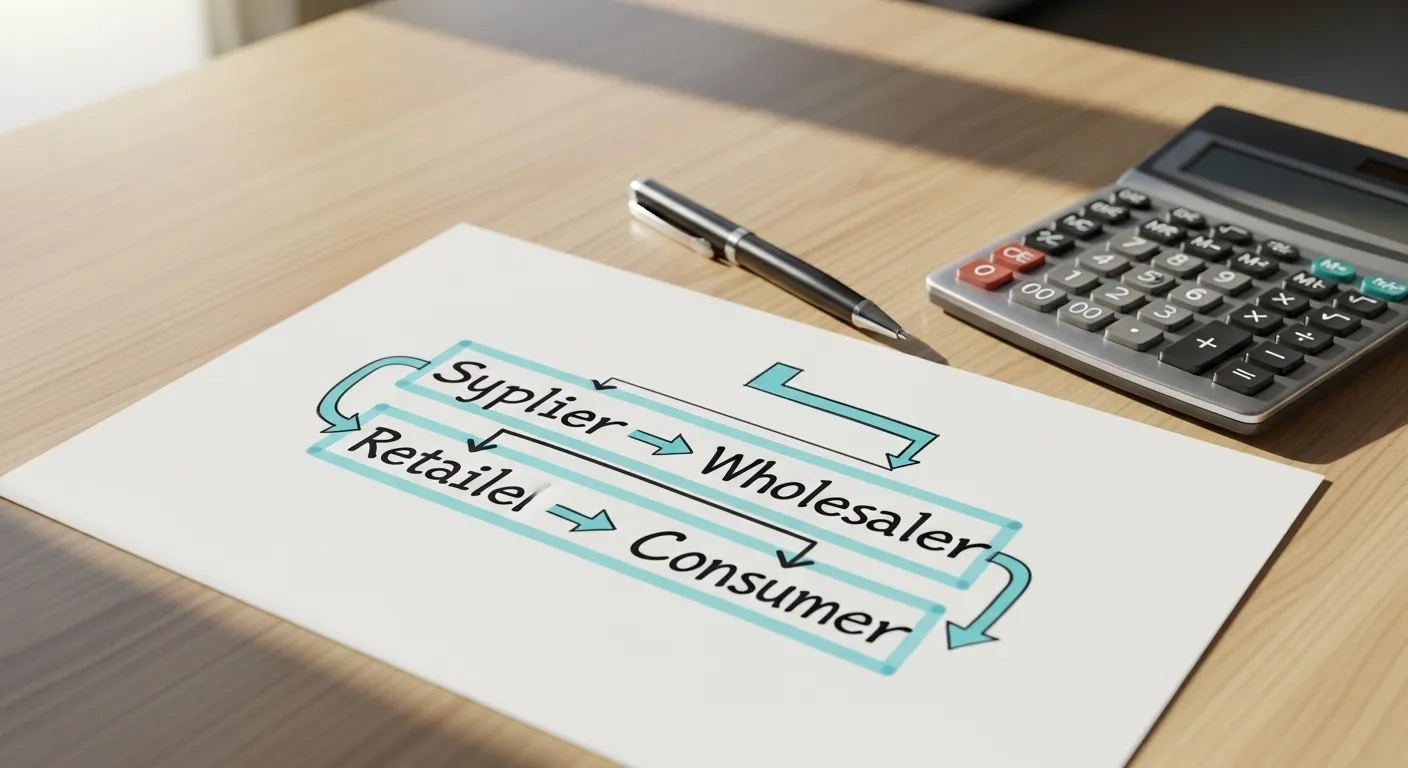
VAT follows goods and services through every step of the supply chain — from supplier to consumer.
Each business adds VAT when it sells something and reclaims VAT on what it buys. This keeps the system fair and transparent.
Input VAT vs Output VAT
Input VAT is the tax a business pays on its own purchases.
Output VAT is the tax it collects on its sales.
The difference between the two is what the business either pays to or reclaims from HMRC.
Simple Flow:
- Supplier → charges VAT on raw materials (output VAT)
- Wholesaler → pays VAT to supplier (input VAT), adds VAT on resale
- Retailer → pays VAT to wholesaler, adds VAT to customer price
- Consumer → pays the final VAT included in the total price
In the end, VAT passes through each stage, but only the final customer truly pays it.
All other businesses recover what they paid.
Our analysis shows this mechanism prevents double taxation and keeps accounting consistent across the trade chain.
Worked Example — 3-Stage VAT Chain
Let’s walk through a clear example.
Supplier sells fabric to a manufacturer for £100 + 20% VAT = £120.
-
Output VAT: £20
-
Supplier sends £20 to HMRC.
The manufacturer sells finished clothes to a retailer for £200 + 20% VAT = £240.
-
Output VAT: £40
-
Input VAT reclaimed: £20 (from the supplier)
-
Pays HMRC only £20 (£40 − £20).
Retailer sells clothes to the consumer for £300 + 20% VAT = £360.
-
Output VAT: £60
-
Input VAT reclaimed: £40 (from the manufacturer)
-
Pays HMRC £20 (£60 − £40).
Final Outcome:
HMRC receives £20 + £20 + £20 = £60, which matches the 20% VAT on the final sale.
The consumer bears the full £60, while each business offsets its own VAT payments.
Based on our findings at vatukcalculator.com, this process ensures each business only pays VAT on the value it adds — hence the name “Value Added Tax.”
B2C vs B2B Outcomes
- B2C (Business to Consumer):
The consumer cannot reclaim VAT, so they pay the full amount.
Example: a customer buying a laptop in-store pays the 20% VAT added to the shelf price.
-
B2B (Business to Business):
The buyer can usually reclaim VAT if registered.
Example: an IT company buying the same laptop for business use can claim back 20% on its VAT return.
We found that B2B transactions recycle VAT within the economy, while B2C sales generate the government’s actual VAT revenue.
VAT Registration & Threshold 2025
Summary:
-
The 2025 VAT threshold is £85,000.
-
Check your turnover monthly under the rolling-year rule.
-
Register early if close to the limit.
- Consider simplified schemes to ease admin and cash flow.
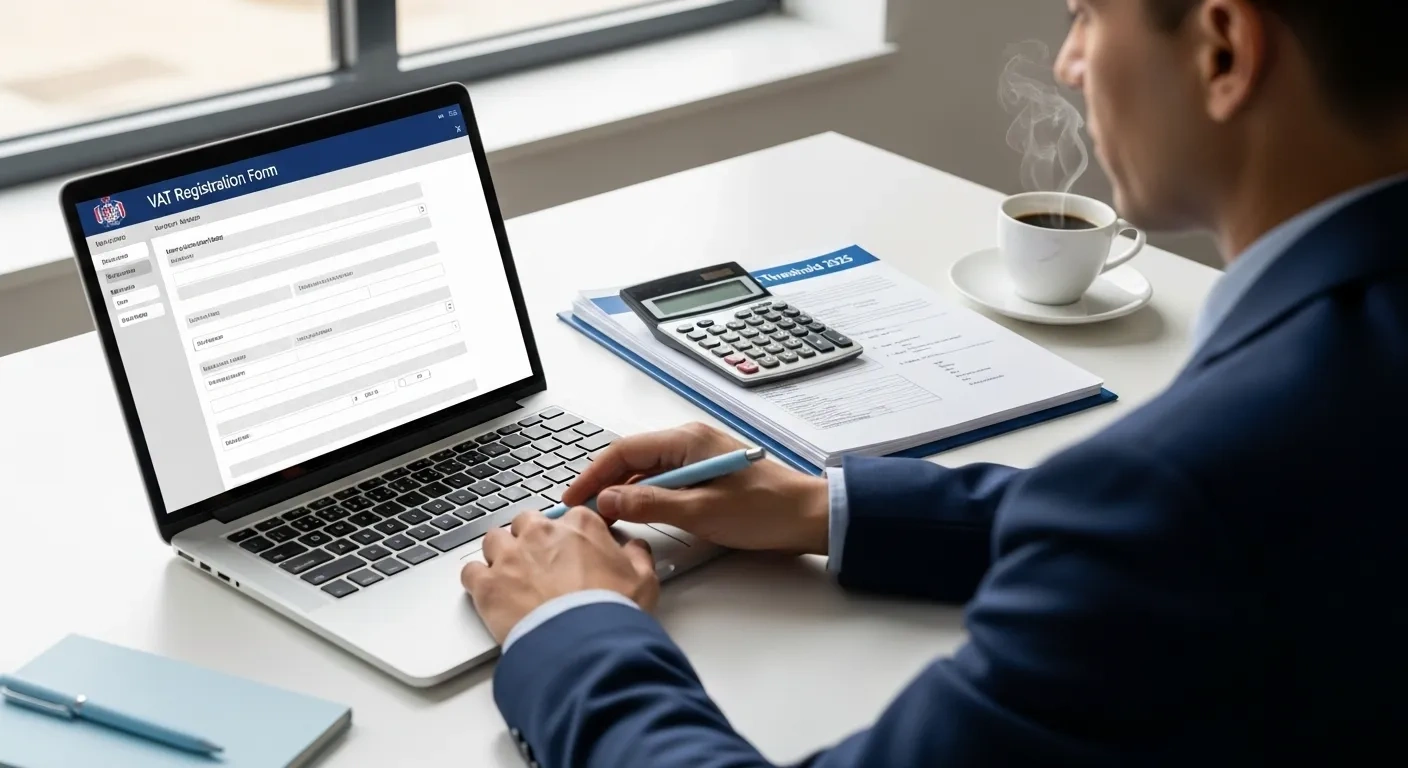
VAT registration decides when a business must start collecting VAT and filing returns.
Understanding the current threshold helps you avoid HMRC penalties and plan cash flow better.
VAT Threshold (Current Figure + Rolling 12-Month Rule)
As of 2025, the UK VAT registration threshold remains £85,000 in taxable turnover.
That means if your total sales of VAT-liable goods or services exceed £85,000 in any rolling 12-month period, you must register with HMRC.
The “rolling 12-month rule” doesn’t follow the calendar year.
Instead, you review your sales every month.
If at any point your past 12 months of taxable sales go beyond £85,000, registration becomes mandatory.
According to Mirza Shafique of vatukcalculator.com, many small businesses cross this limit without noticing because they check turnover only at year-end.
Regular monthly reviews prevent surprise registration notices from HMRC.
Example:
If your sales from April 2024 to March 2025 total £86,200, you must register—even if earlier months were lower.
When You Must Register & When Voluntary Registration Helps
Mandatory registration applies when:
-
Your taxable turnover exceeds £85,000.
-
You expect it will exceed the threshold within the next 30 days.
-
You buy goods from other countries worth more than £85,000 in a year.
Voluntary registration can help even if you earn less than the limit.
Benefits include:
-
Claiming VAT on business purchases (input tax).
-
Showing clients you’re a credible, VAT-registered business.
-
Preparing early for future growth.
However, voluntary registration may reduce cash flow if most of your clients aren’t VAT-registered (common in B2C trades).
Our analysis shows freelancers often gain less from voluntary registration than B2B suppliers who can reclaim input VAT.
Sector Notes — Freelancers, E-Commerce, Hospitality, Digital Services
Different sectors hit the threshold in different ways:
-
Freelancers & Consultants: Revenue may fluctuate, so track income monthly. Digital invoices and accounting apps simplify it.
-
E-Commerce Sellers: Platforms like Amazon or Shopify automatically include VAT on UK sales once registered. Stay alert if you sell both in the UK and abroad.
-
Hospitality Businesses: Restaurants and cafés often reach £85k quickly; accurate daily till reports help monitor turnover.
-
Digital Services Providers: If you sell to EU customers, follow the One Stop Shop (OSS) or Non-Union OSS rules for cross-border VAT.
We found that service-based professionals reach the threshold through consistent retainers, while retailers cross it through volume sales.
Special Schemes to Be Aware Of
HMRC offers simplified VAT options that reduce paperwork:
-
Flat Rate Scheme (FRS): Pay a fixed VAT percentage on your turnover instead of tracking every purchase. Best for small service firms.
-
Cash Accounting Scheme: Pay VAT only when you receive payments, not when you issue invoices—ideal for slow-paying clients.
-
Annual Accounting Scheme: File one VAT return per year with advance payments spread over the year.
Each scheme suits different business types and turnover levels.
Check HMRC’s detailed guidance before choosing one. See official HMRC schemes
VAT Returns & Deadlines (MTD-Ready)
Summary:
-
MTD now covers all VAT-registered businesses.
-
File digitally using approved software.
-
Standard deadline = 1 month + 7 days after each period.
-
Keep digital records for six years to stay compliant.
Once you’re VAT-registered, you must file VAT Returns showing what you charged and what you paid. These returns are now fully digital under the Making Tax Digital (MTD) system.
Making Tax Digital — Who It Applies To
Making Tax Digital (MTD) is the UK government’s system for filing VAT online.
It’s mandatory for all VAT-registered businesses, no matter how big or small.
Under MTD, you must:
-
Keep VAT records digitally.
-
Use HMRC-approved software to submit your return.
-
Avoid manual entry or paper forms.
Since April 2023, even businesses below the £85,000 threshold must use MTD if they are VAT-registered.
According to Mirza Shafique from vatukcalculator.com, adopting MTD tools early helps small traders stay error-free and meet HMRC standards without last-minute stress.
What Goes on a VAT Return
A VAT Return summarizes:
-
Output VAT – the VAT you charged on sales.
-
Input VAT – the VAT you paid on purchases.
-
Adjustments – any corrections, bad-debt relief, or reverse-charge items.
The return normally includes nine boxes:
| Box | Description |
|---|---|
| 1 | VAT due on sales and other outputs |
| 2 | VAT due on goods bought from the EU |
| 3 | Total VAT due (Box 1 + 2) |
| 4 | VAT reclaimable on purchases (input tax) |
| 5 | Net VAT to pay or reclaim (Box 3 – 4) |
| 6 | Total sales (excluding VAT) |
| 7 | Total purchases (excluding VAT) |
| 8 | EU goods sales (if any) |
| 9 | EU goods purchases (if any) |
Our analysis shows most small UK businesses only fill boxes 1–7 since post-Brexit trade rarely needs EU entries.
Filing Frequency & Deadlines
Most businesses file quarterly VAT Returns, but some can file monthly or annually under special schemes.
-
Quarterly norm: every 3 months.
-
Deadline: 1 month + 7 days after the end of your accounting period.
Example: If your VAT period ends on 31 March, you must file and pay by 7 May.
Late filing or payment can trigger surcharges and penalty points.
We found that scheduling digital reminders inside your accounting software prevents missed deadlines better than email alerts alone.
Compatible Software & Records You Must Keep
To comply with MTD, you need software that connects directly to HMRC.
Popular options include QuickBooks, Xero, FreeAgent, and Zoho Books.
Your records must include:
-
Sales and purchase invoices showing VAT amounts.
-
VAT account summary for each period.
-
Digital links between spreadsheets or systems (no copy-paste).
You must keep VAT records for at least six years in case of an HMRC review.
According to vatukcalculator.com, cloud-based tools with built-in digital links meet this rule automatically and make audits easier.
How to Pay VAT (Methods)
Summary:
-
Pay online for speed.
-
Use Direct Debit for simplicity.
-
Bank transfers are ideal for flexibility.
-
Standing orders suit steady cash flow.
-
Always quote your 9-digit VAT number with every payment.
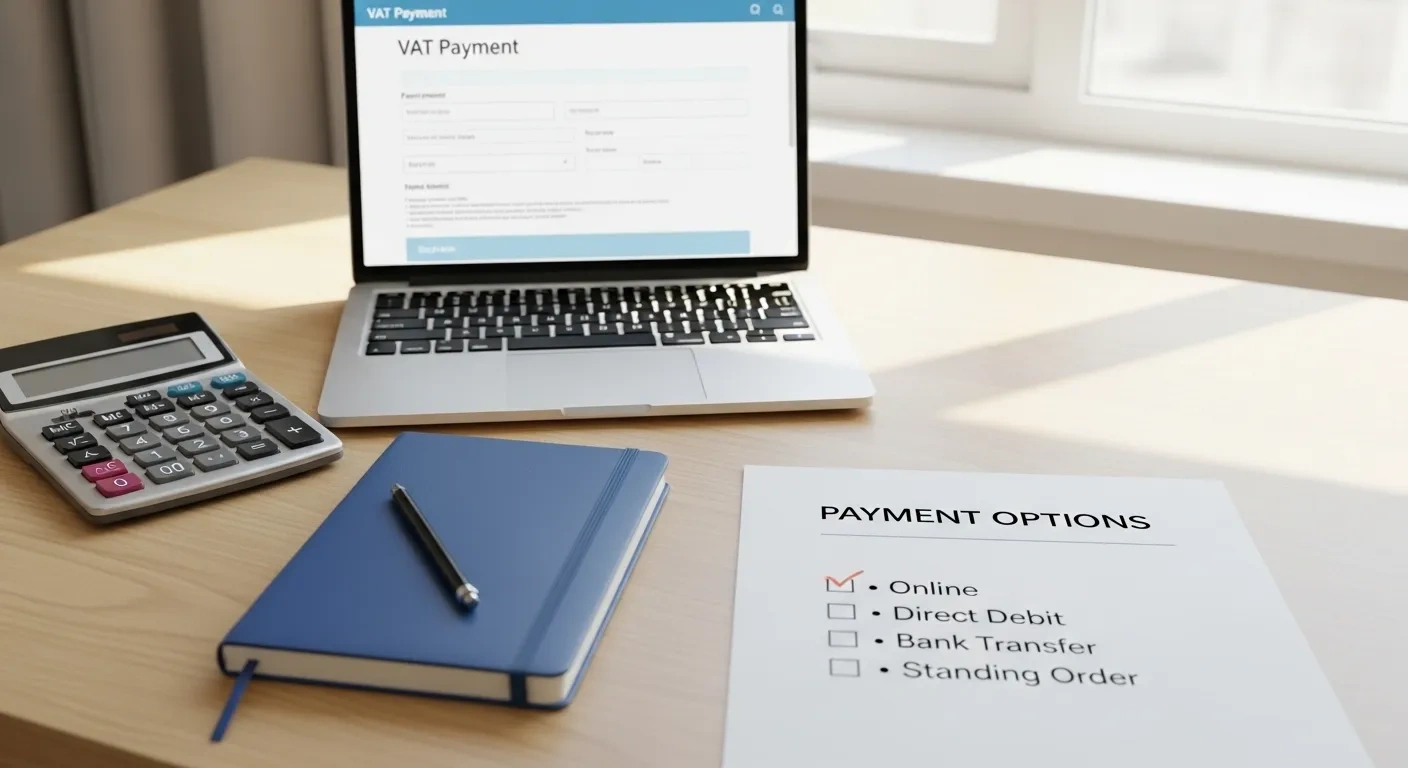
After submitting your VAT Return, you must pay any amount due to HMRC by the deadline.
You can choose several payment methods depending on your business setup and convenience.
Online Card or Bank Payment
The fastest option is to pay online through the HMRC VAT payment portal.
You can use a debit card, corporate credit card, or bank account directly.
Simply log in to your HMRC account, enter your 9-digit VAT registration number, and confirm the payment.
Most online payments reach HMRC within two working days.
According to vatukcalculator.com, online card payments are the most reliable way for small businesses to avoid late fees.
Direct Debit
Direct Debit lets HMRC collect VAT automatically each quarter.
You must set it up at least ten working days before your first payment date.
Once approved, HMRC will withdraw the correct amount after each return is filed.
This method works well for steady cash-flow businesses because it avoids manual transfers.
If you change bank accounts, remember to cancel and re-authorize your mandate in the new account.
Bank Transfer (Faster Payments / CHAPS / Bacs)
You can also pay by sending money directly from your bank.
Different transfer types affect how quickly the payment reaches HMRC:
| Method | Speed | Use When |
|---|---|---|
| Faster Payments | Same day or next day | Most online banking apps |
| CHAPS | Same day (if sent before cutoff) | Large or urgent payments |
| Bacs | Takes up to 3 working days | Regular scheduled payments |
Always use these official details for HMRC VAT payments:
-
Sort code: 08-32-00
-
Account number: 11963155
-
Account name: HMRC VAT
For international payments:
-
IBAN: GB36BARC20051773152391
- BIC: BARCGB22
At Bank or Building Society (Paying-In Slips)
If you prefer paying in person, you can use paying-in slips from HMRC.
These take around six weeks to arrive after you order them.
Payments can be made in cash or cheque at your local bank or building society.
Write cheques payable to HM Revenue and Customs only and include your 9-digit VAT number on the back.
This method is slower but still accepted by HMRC for traditional businesses.
Standing Order (Annual Accounting / Payments on Account)
Businesses using the Annual Accounting Scheme or Payments on Account can pay VAT in regular installments.
Standing orders spread the cost and reduce pressure at quarter-end.
You must contact HMRC to set this up and confirm your payment schedule.
This method suits companies with predictable VAT bills and steady income.
💡 Tip: Remember Your 9-Digit VAT Number
Always include your VAT registration number when making any payment.
It ensures HMRC applies the money to the right account and avoids delays or penalties.
Reclaiming & Refunds
Summary:
-
You can reclaim VAT when input tax exceeds output tax.
-
Keep full digital evidence for six years.
-
Avoid claiming blocked items like entertainment or personal costs.
- HMRC refunds usually arrive within 10 working days once approved.
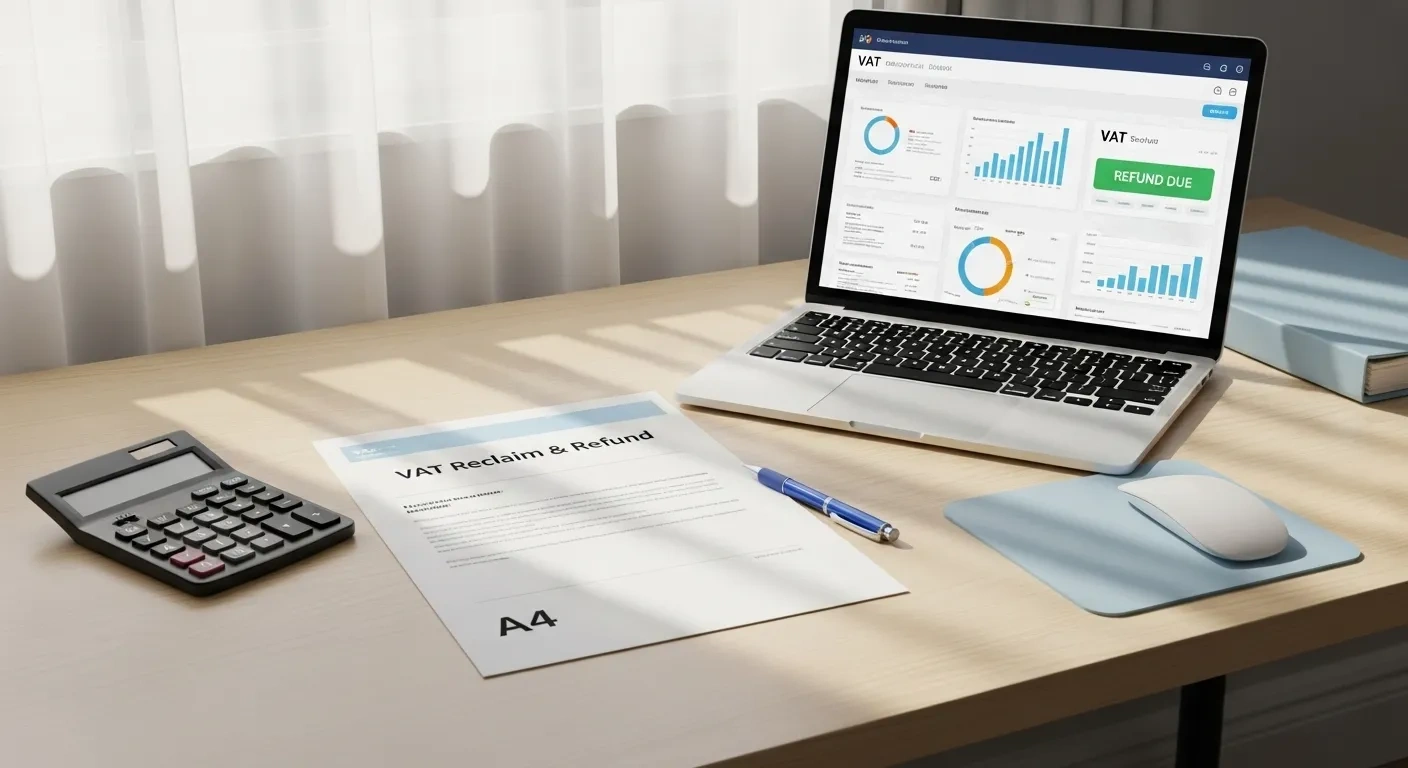
Sometimes you pay more VAT on your business purchases than you collect from customers.
When that happens, you’re due a VAT refund from HMRC.
This section explains when you can reclaim VAT, what proof you need, and how the process works.
Reclaiming VAT (Input vs Output)
Every VAT-registered business deals with two types of VAT:
-
Input VAT: the VAT you pay on goods and services you buy for business use.
-
Output VAT: the VAT you charge customers on your sales.
If input VAT > output VAT, you can reclaim the difference from HMRC.
This usually happens when:
-
You make large equipment or stock purchases.
-
You trade zero-rated goods (like food or children’s clothing).
-
Your business is new and has higher setup costs than sales.
According to vatukcalculator.com, most small firms get at least one refund in their first year after registration.
Evidence Needed (VAT Invoices & Digital Records)
HMRC requires clear evidence for every claim.
You must keep:
-
VAT invoices from suppliers showing their VAT number and the tax amount.
-
Receipts for smaller business expenses.
-
Digital records of sales and purchases under Making Tax Digital rules.
All records should be stored securely for at least six years.
Digital copies are accepted as long as they’re clear and readable.
Missing or vague invoices can lead to rejected claims.
VAT Refund Step-by-Step (Short Checklist)
-
File your VAT Return online.
-
Ensure Box 5 shows a negative amount (refund due).
-
Double-check supplier invoices and totals.
-
Submit your return and confirm bank details with HMRC.
-
Wait for the refund—usually within 10 working days.
If HMRC needs more information, they’ll contact you by letter or through your online account.
Keep replies prompt to avoid extra delays.
Example Case — Negative Return → Repayment
Scenario:
Sarah runs “Sarah’s Stationery Haven,” a small shop in London.
In one quarter, she buys new stock worth £10,000 + £2,000 VAT, but her total sales are only £5,000 + £1,000 VAT.
Calculation:
-
Output VAT: £1,000
-
Input VAT: £2,000
-
Refund due: £1,000
Sarah reports this on her VAT Return (Box 5 = –£1,000).
HMRC verifies her invoices and sends the refund to her business bank account within two weeks.
Based on our findings, this type of case is common among new retailers during restocking periods.
Imports & Exports (Post-Brexit Basics)
Summary:
-
All imports now follow the same VAT rules, regardless of origin.
-
Use Postponed VAT Accounting to manage import VAT on your return.
-
Most exports qualify for zero-rating, but proof of export is essential.
-
Tourist refunds exist only through limited private schemes after Brexit.
Since Brexit, VAT rules for goods moving between the UK and other countries have changed.
Whether you import or export, it’s vital to know how VAT applies to each step.
VAT on Imports (EU vs Non-EU)
After leaving the EU, the UK treats all imports—from both EU and non-EU countries—the same way.
When you bring goods into the UK, you usually pay import VAT at the same rate as if the goods were bought locally.
-
From the EU: Import VAT applies at UK rates (20%, 5%, or 0%). Customs declarations are now required.
-
From non-EU countries: Import VAT and customs duties are both charged when goods enter the UK.
If you’re VAT-registered, you can reclaim this import VAT on your next return, provided you have proper import documentation (for example, a C79 certificate).
If you’re not VAT-registered, you must pay the VAT upfront and can’t reclaim it later.
According to vatukcalculator.com, most small importers miss reclaim opportunities because they overlook digital proof from their customs agents.
Postponed VAT Accounting
The UK introduced Postponed VAT Accounting (PVA) to help manage cash flow.
It allows VAT-registered importers to account for import VAT on their VAT Return instead of paying it immediately at the border.
This means:
-
You declare both input and output VAT in the same return.
-
There’s no upfront cash payment.
-
Your return shows the import VAT reclaimed at the same time.
PVA applies automatically if you use your EORI number and opt in on your customs declaration.
Check HMRC’s PVA guidance
Our analysis shows PVA is now the default choice for most digital-era UK importers because it avoids large cash outflows.
VAT on Exports (Zero-Rating Rules, Evidence & Services Note)
Exports leaving the UK are usually zero-rated, meaning you charge 0% VAT to your overseas customer.
But you must prove the goods left the UK within the time limit (usually three months).
Keep:
-
Commercial invoices and transport documents.
-
Proof of shipping (airway bill, bill of lading, etc.).
-
Payment confirmation from the buyer.
For services, VAT depends on where the customer is based:
-
B2B services to foreign clients are usually outside UK VAT.
-
B2C services may still need UK VAT if supplied to UK-resident consumers.
Travelers / Tax-Free Shopping
Visitors from outside the UK can often reclaim VAT on certain goods they buy and take home.
However, post-Brexit, the VAT Retail Export Scheme was withdrawn for most tourists.
Some airports and retailers may still offer independent tax-free services.
Conclusion — VAT UK Rate 2025
Summary:
-
Standard rate: 20% on most goods and services.
-
Reduced rate: 5% on home energy and selected items.
-
Zero rate: 0% on most food, children’s clothes, books, and public transport.
-
Exempt: finance, education, health, and some property.
-
Outside scope: statutory fees, true donations, non-UK supplies.
If you’re asking how much is VAT in the UK, the headline stays clear: 20% standard, 5% reduced, 0% zero-rate. Some supplies are exempt or outside the scope. Use our VAT calculator to add or remove VAT in seconds. It follows the same formulas you’ll see in HMRC guidance.
For businesses, remember the £85,000 VAT threshold, Making Tax Digital, and the split between input VAT and output VAT. Imports can use Postponed VAT Accounting for cash-flow relief. Most exports qualify for zero-rating with the right evidence.