VAT Threshold UK Explained | Registration Limit, Rules, and History

The VAT threshold UK is the point at which a business must register for VAT with HMRC. The current VAT registration threshold UK is £90,000, based on VAT taxable turnover, not profit, and it is measured using a rolling 12-month period, not the tax year. To track this correctly, many businesses use a VAT Calculator to monitor turnover month by month and avoid crossing the limit unexpectedly.
If your turnover goes over this level, VAT registration becomes mandatory. There is also a VAT deregistration threshold of £88,000, which allows businesses to apply to cancel registration if sales fall. Many businesses get caught out because the rule does not reset every April. HMRC checks your turnover every month by looking back at the previous 12 months.
Registration can also be triggered sooner if you expect turnover to exceed £90,000 in the next 30 days alone. The UK threshold is considered high compared to many other countries, giving small businesses more room to grow before VAT applies.
Based on our analysis at vatukcalculator.com, most VAT problems begin as turnover approaches the £70,000 to £90,000 range, which is why early planning matters more than the number itself.
What is the VAT threshold in the UK?
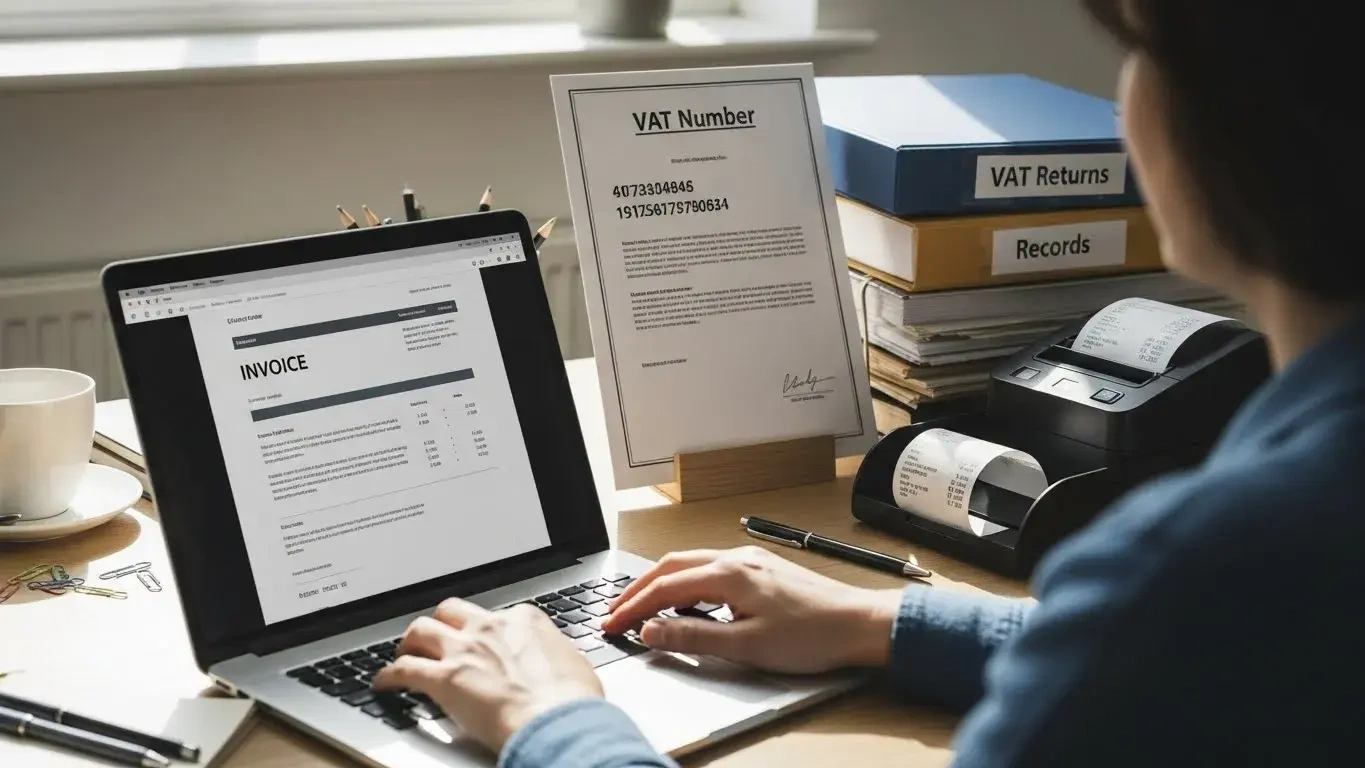
The VAT threshold UK is the turnover point where a business must register for VAT. In simple terms, it is the level of VAT taxable turnover that triggers a legal duty to charge VAT and file VAT returns. Once registered, some businesses choose options like the VAT Flat Rate Scheme to simplify how VAT is calculated and paid. This rule comes from HMRC and applies across the UK under guidance published on GOV.UK.
Turnover matters here, not profit. HMRC looks at the total value of taxable sales you make. This includes standard rate, reduced rate, and zero rate supplies, which is different from schemes like VAT Refund UK Tourist that apply to visitor purchases rather than business turnover. Exempt sales do not count toward the threshold. Our analysis shows many businesses misjudge this and track profit instead. That mistake often leads to late registration.
The rule applies to all business types in the same way. There is no special limit for structure.
-
Sole traders follow the same VAT threshold
-
Partnerships use the same turnover test
-
Limited companies have the same registration limit
It does not matter how your business is set up. If taxable turnover reaches the threshold, registration becomes required.
A common confusion is the difference between the VAT threshold and VAT rates. These are not the same thing. The threshold decides when you must register. VAT rates decide how much VAT you charge after registration. Most goods and services fall under the standard rate. Some use a reduced rate. Others are zero-rated or exempt. Crossing the threshold does not change the rate itself. It changes your obligation to charge VAT at the correct rate.
Based on our findings at vatukcalculator.com, this mix-up causes pricing errors and invoice issues. According to Mirza Shafique, businesses should separate these ideas early. First, check if you need to register. Only then, focus on which VAT rate applies to your sales.
Current VAT registration threshold UK
Current UK VAT threshold
The current VAT threshold UK is £90,000 in VAT taxable turnover. If your business exceeds this level, VAT registration becomes required. This limit applies across the UK and is checked using a rolling 12-month period rather than the tax year. Once registered, understanding topics like how to claim VAT refund UK becomes important, especially when reclaiming VAT on eligible business costs. There is also a VAT deregistration threshold of £88,000, which allows businesses to apply to cancel registration if turnover falls.
These thresholds have applied since 1 April 2024, replacing the long-standing £85,000 limit. According to guidance from HMRC on GOV.UK, the change was introduced to reduce pressure on smaller businesses near the threshold. Based on our analysis at vatukcalculator.com, tracking turnover monthly is the simplest way to avoid rushed VAT decisions and late registration issues.
VAT threshold UK change
As things stand, the VAT registration threshold remains £90,000 for the 2025 and 2026 tax periods. There has been no confirmed increase or reduction beyond this level. Any future change would be announced by the UK government and updated by HMRC, which is why tools like guides on how to use the VAT Calculator UK help businesses track turnover accurately using the current rules.
Our findings show that guessing future thresholds leads to poor planning. According to Mirza Shafique, businesses should work with the current limit and focus on practical steps like learning how to work out VAT in the UK under existing rules. If a change happens, HMRC will publish it clearly.
VAT threshold UK history
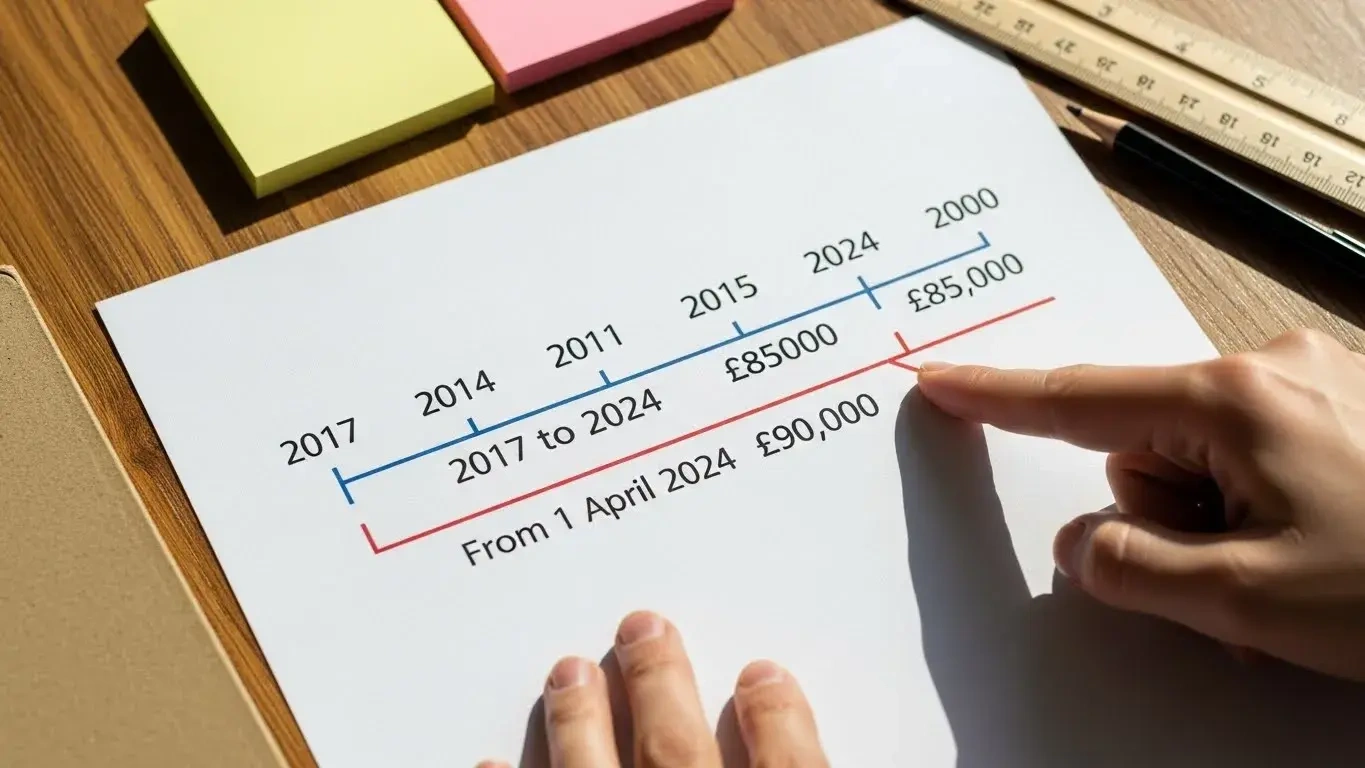
Understanding the VAT threshold history explains why businesses watch this number so closely. The threshold rarely changes, so even small increases create confusion and planning issues.
VAT registration threshold UK over time
| Tax period | VAT threshold |
|---|---|
| 2014 to 2015 | £81,000 |
| 2015 to 2016 | £82,000 |
| 2016 to 2017 | £83,000 |
| 2017 to 2024 | £85,000 |
| From 1 April 2024 | £90,000 |
For seven years, the VAT threshold stayed fixed at £85,000. During this freeze, many small businesses limited growth to avoid VAT registration. Rising costs meant turnover increased without the same rise in profit, pushing more firms close to the limit.
Based on our analysis at vatukcalculator.com, the move to £90,000 in 2024 eased short term pressure for many businesses. It also shows a clear pattern: the VAT threshold changes slowly, so when it does, early planning matters more than reacting late.
Why VAT rates matter when you cross the threshold
VAT rate history matters for one reason only. Once you cross the VAT threshold UK, rates start affecting your business directly.
Before registration, VAT rates do not change your pricing. After registration, every invoice must apply the correct VAT rate. This impacts:
-
Final prices charged to customers
-
Invoice structure and records
-
Profit margins if VAT is absorbed
Based on our analysis at vatukcalculator.com, this shift is often harder than the registration itself. According to Mirza Shafique, businesses that plan pricing before crossing the threshold face fewer cash flow issues later.
For a deeper breakdown of how UK VAT rates evolved and how each rate works, we recommend reading our UK VAT rate history guide, which covers this topic in full.
VAT taxable turnover explained
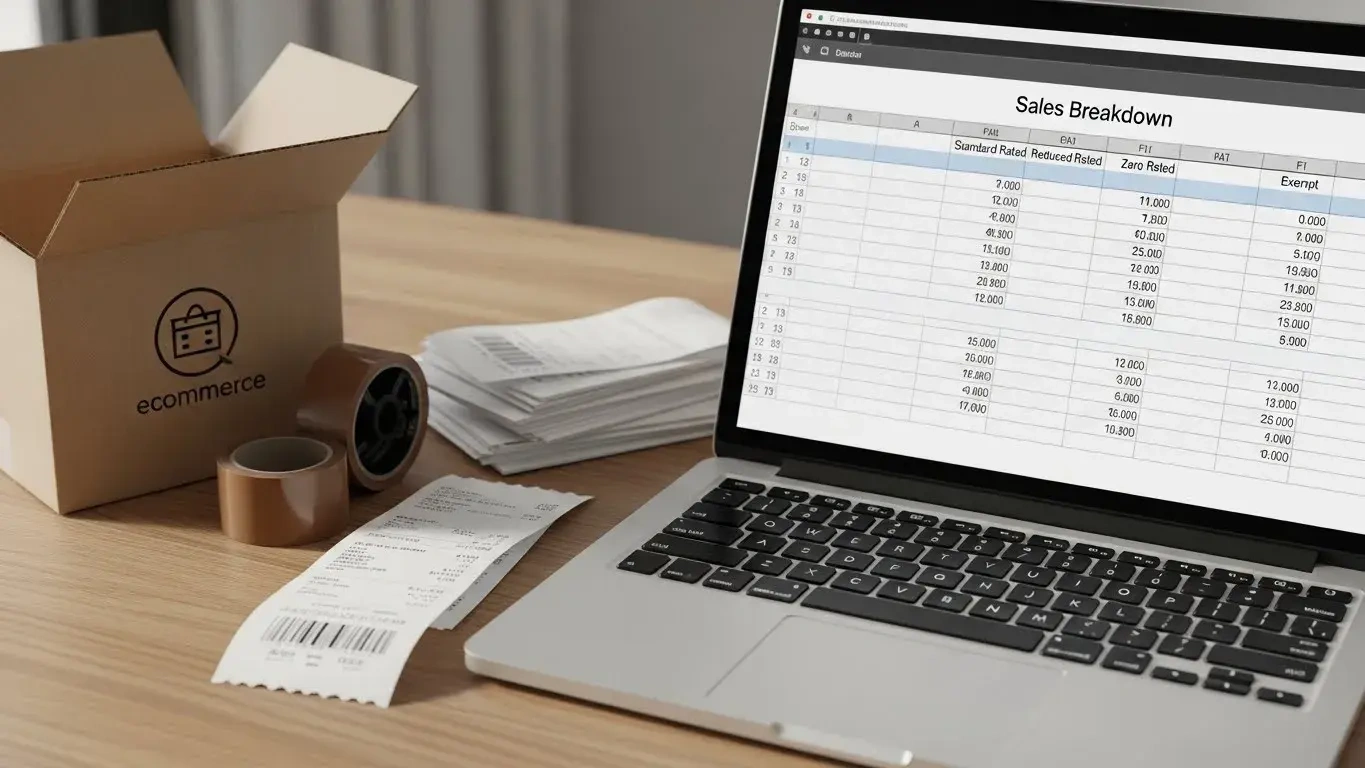
This is where many businesses get stuck. Most VAT mistakes start with a wrong turnover figure. Getting this part right makes everything else easier.
What counts in taxable turnover
VAT taxable turnover is the total value of sales that are subject to VAT rules. It includes sales even if the VAT rate is zero.
The following do count toward taxable turnover:
-
Standard-rated sales
-
Reduced rated sales
-
Zero-rated sales
The following do not count:
-
Exempt sales
-
Income is fully outside the scope of VAT
Here are simple examples based on our analysis at vatukcalculator.com.
Service business example
A UK consultant earns £95,000 from client services charged at the standard rate. All of this counts toward the VAT threshold. VAT registration becomes required.
E-commerce business example
An online store sells clothing worth £60,000 and accessories worth £35,000. Both are standard rated. The total taxable turnover reaches £95,000, which means the VAT threshold UK is crossed.
Zero-rated seller example
A food supplier sells zero-rated items worth £92,000. Even though the VAT charged is zero, the full amount still counts. Registration becomes required.
Mixed income example
A tutor earns £70,000 from exempt education services and £25,000 from standard-rated workshops. Only £25,000 counts toward taxable turnover. VAT registration is not required yet.
Is the VAT threshold based on turnover or profit?
The VAT threshold is based on turnover, not profit. HMRC does not care how much you keep after costs. It only looks at VAT taxable turnover. Even if your business makes a small profit or a loss, VAT registration may still apply.
According to Mirza Shafique, this is where many small businesses get caught. High expenses do not reduce your VAT threshold exposure. Only exempt income affects the calculation.
Does turnover include VAT?
This is another common confusion. If you are not VAT registered, your turnover does not include VAT because you are not charging it. If you are already VAT registered, VAT charged to customers is not counted as part of your taxable turnover. It belongs to HMRC, not your business.
How the rolling 12 month VAT threshold works
The rolling 12 month rule is one of the most misunderstood VAT rules. It catches businesses off guard because it does not follow the tax year. HMRC checks your sales every month, not once a year.
The rolling 12 month check
Each month, you total your VAT taxable turnover for the previous 12 months. If that figure goes over the VAT threshold UK, VAT registration becomes required. There is no reset in April. Any rolling 12-month period can trigger registration, and HMRC expects this check to be done monthly.
For example, turnover might rise from £82,000 to £87,000 and then to £91,000 across overlapping 12-month periods. Once it passes £90,000, registration is required, even if no single month stands out. Based on our analysis at vatukcalculator.com, steady growth often causes late registration because businesses focus on monthly sales instead of the rolling total.
The next 30 days rule
The next 30 days rule applies if you expect your VAT taxable turnover to exceed £90,000 within the next 30 days alone. In that case, VAT registration is required immediately, even if past turnover was lower. This often happens after signing a large contract due to start soon. According to Mirza Shafique, many late registrations occur because businesses wait for payment, but HMRC expects action as soon as the income is expected.
When do I need to register for VAT?
You need to register for VAT if your VAT taxable turnover goes over £90,000. The deadline is 30 days from the end of the month in which you crossed the threshold. For example, if turnover passes the limit in May, you must register by 30 June. If you register late, you may still owe VAT from the effective date, even if you did not charge customers.
If turnover exceeds the threshold because of a one-off spike, such as a temporary contract, you may apply for an exception from registration. This only works if you can show that future turnover will fall below the VAT deregistration threshold. Based on our analysis at vatukcalculator.com, this option succeeds only when the spike is clearly non-recurring and well supported by evidence.
What happens after you become VAT registered
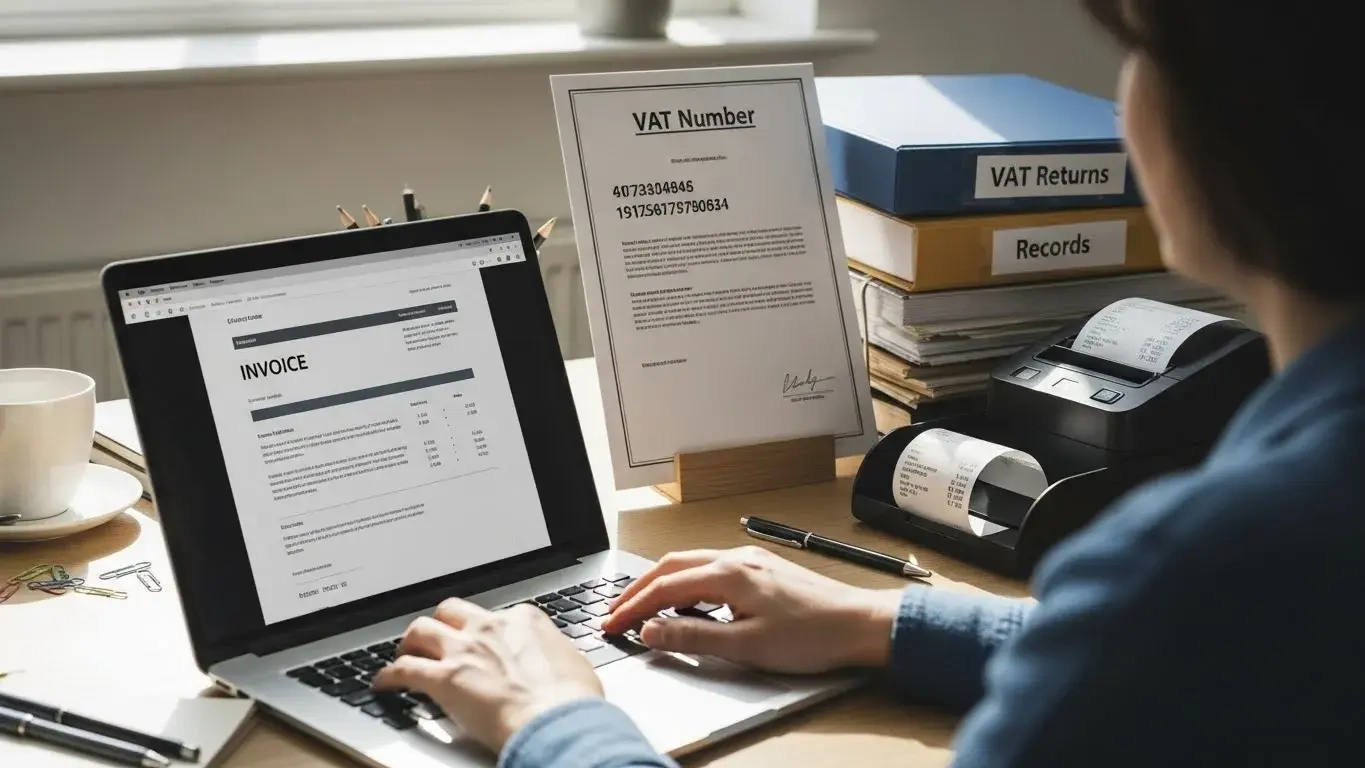
VAT registration after crossing the VAT threshold UK changes how your business runs day to day. The paperwork increases, but the biggest impact is often on pricing and cash flow.
Pricing decisions after VAT registration
After VAT registration, you must decide how to price your services. You can add VAT on top of prices, which suits B2B clients who can reclaim it, or absorb VAT, which keeps prices stable but cuts profit. Based on our analysis at vatukcalculator.com, planning pricing before the effective registration date helps avoid cash flow issues later.
VAT invoices and record basics
After registration, you must issue proper VAT invoices for taxable sales. These invoices must include specific details.
A valid VAT invoice should show:
-
Your business name and address
-
Your VAT registration number
-
A unique invoice number
-
Invoice date and supply date
-
Description of goods or services
-
Net amount before VAT
-
VAT rate applied
-
VAT amount charged
-
Total amount payable
VAT returns and payment cycle
Most VAT-registered businesses file VAT returns every three months. Each return shows VAT charged on sales and VAT paid on expenses. The difference decides whether you owe HMRC or receive a refund.
VAT returns must be submitted under Making Tax Digital rules. This means records are kept digitally, and returns are filed using approved software. Paper returns are no longer accepted.
Our findings show that businesses using simple accounting tools make fewer errors and spend less time fixing VAT mistakes. Keeping records clean from day one makes VAT much easier to manage.
Voluntary VAT registration
You do not always have to wait until you hit the VAT threshold. Some businesses choose to register early. This can help or hurt, depending on how you trade.
Reasons to register early
One clear benefit is the ability to reclaim input VAT. Once registered, you can claim back VAT paid on eligible business costs. This includes equipment, software, professional services, and stock, even if you register before reaching the VAT threshold UK.
This often helps businesses with high startup costs. Our analysis at vatukcalculator.com shows that this matters most in the first year, when spending is high, and cash flow is tight.
Voluntary registration can also work well for B2B businesses. If your clients are VAT registered, they can reclaim the VAT you charge. In this case, adding VAT does not increase their real cost. According to Mirza Shafique, many consultants and agencies register early for this reason. It simplifies future growth and avoids rushed changes later.
There is also a trust factor. Some clients see VAT registration as a sign of scale and stability. This does not apply to every sector, but it can help in competitive B2B markets.
Reasons to stay unregistered if allowed
Voluntary registration does not suit everyone. If your customers are mostly individuals, price sensitivity becomes a real issue. Adding VAT can push prices up and make you less competitive. Some small businesses choose to stay below the threshold for this reason.
There is also an admin load to consider. VAT registration brings extra work. You must keep detailed records, issue VAT invoices, and file VAT returns on time. Even with software, this adds effort.
According to guidance from HMRC on GOV.UK, these duties apply even if you register voluntarily. The rules do not change.
Based on our findings, voluntary VAT registration works best when input VAT is high, or clients can reclaim VAT. If neither applies, waiting can be the smarter choice.
VAT schemes and thresholds
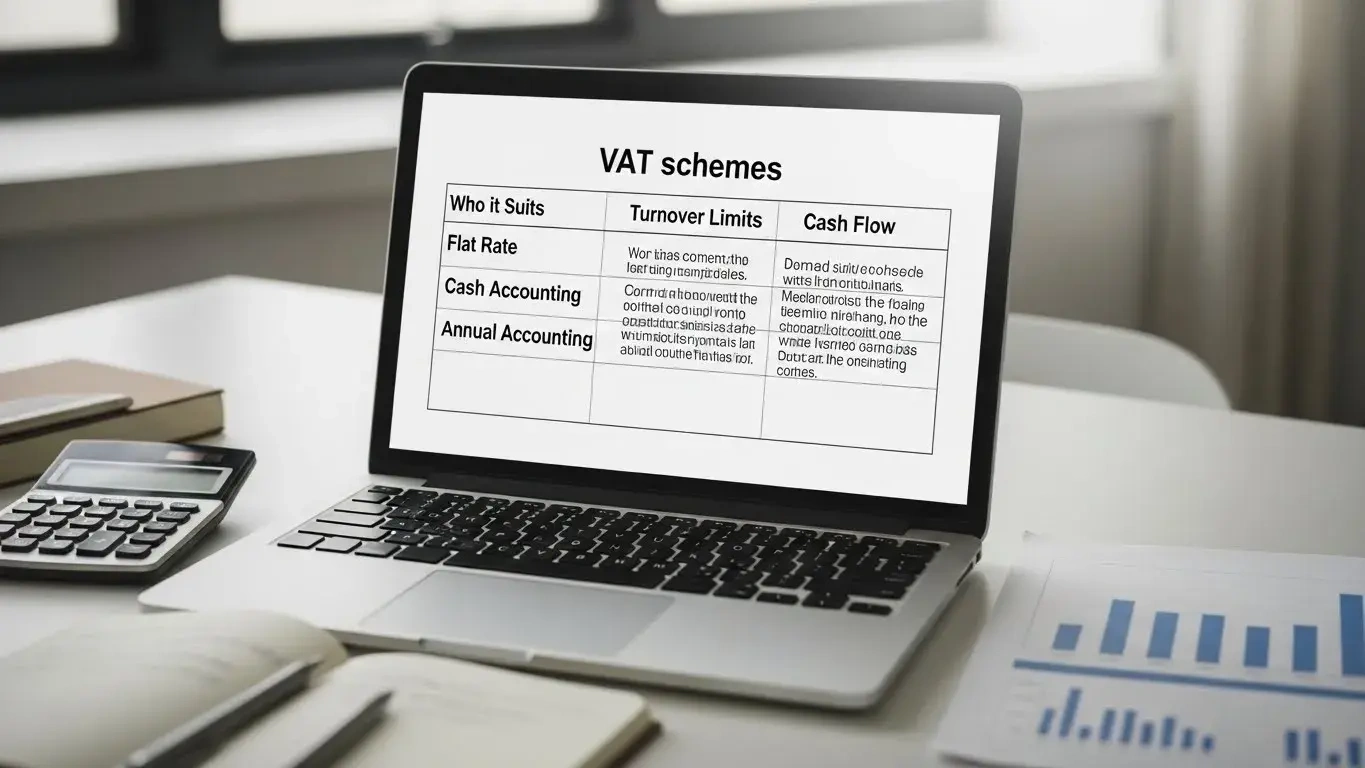
VAT schemes can change how you calculate and pay VAT once your business approaches the VAT threshold UK. Each scheme has its own turnover limits. Choosing the right one depends on how your business earns and spends money.
Flat Rate Scheme
The Flat Rate Scheme is popular with small service businesses. Instead of calculating VAT on each sale and expense, you pay HMRC a fixed percentage of your turnover.
Key thresholds:
-
You can join if your VAT taxable turnover is £150,000 or less
-
You must leave if turnover goes above £230,000
According to HMRC guidance on GOV.UK, this scheme suits businesses with low VAT reclaim on costs. Our analysis at vatukcalculator.com shows it works best for consultants and digital services.
Cash Accounting and Annual Accounting schemes
These schemes focus on timing, not rates.
For both schemes:
-
You can join if your taxable turnover is £1.35 million or less
-
You must leave if turnover goes above £1.6 million
The Cash Accounting Scheme lets you pay VAT only when customers pay you. This helps cash flow. The Annual Accounting Scheme allows one VAT return per year with advance payments. Based on our findings, these schemes help businesses with slow-paying customers or predictable income.
Scheme choice depends on cash flow and customers.
There is no best scheme for everyone. The right choice depends on how and when money moves through your business.
Conclusion
The VAT threshold UK is simple once you understand how it actually works. VAT registration is triggered by £90,000 in VAT taxable turnover, checked every month using the rolling 12-month rule, not profit, and not the tax year. Most VAT problems happen when businesses track sales too late or misunderstand taxable turnover, exemptions, and timing rules.
Our analysis at vatukcalculator.com shows that planning before you reach the threshold matters more than the threshold itself. If you track turnover monthly, understand what counts, and prepare pricing early, VAT becomes manageable instead of stressful. According to Mirza Shafique, businesses that treat VAT as a planning decision rather than a last-minute reaction avoid penalties, cash flow issues, and compliance headaches.